
Anthropology of Mid-Sized Startups
Guest post by Kevin Simler, who works at Palantir, observes the startup scene, and writes at Melting Asphalt, about... well, go see for yourself.
In their natural habitats, social species organize into characteristic groups. Gazelles form herds, wolves form packs, and ants form colonies. Humans, in the same way, form tribes.
Of course, we're pretty far removed from our natural habitat these days. But tribes are a large and fundamental part of our evolutionary heritage, and they have a corresponding influence on our mental and social lives. Organizing ourselves into tribes is one of the ways we manufacture normalcy. It helps our paleolithic minds perceive and act, more or less sensibly, in an increasingly complex modern world.
 Humans also form kingdoms, nations, states, and civilizations, but those units of organizations aren't as fundamental to our psychology. Statecraft is an esoteric enterprise; we spend most of our cycles processing social data at the tribal scale. Even Kissinger, for all his mastery of foreign relations, had to play tribe-level politics in the White House and State Department.
Tribal psychology dominates in mid-sized organizations -- between 10 and 1000 employees, let's say. These two numbers flank Dunbar's number (roughly 150) by an order of magnitude on each side. Dunbar's number is the "cognitive limit to the number of people with whom one can maintain stable social relationships," and serves as a good midpoint for the size of organizations we're going to look at. Below 10 employees, all you have is a simple working group. Above 1000 you'll start to need "more restrictive rules, laws, and enforced norms to maintain a stable, cohesive group." Between those two is where the tribe lies.
So let's see what happens when we treat startups as tribes.
To do that, we'll need to use the methods of anthropology rather than business analysis. I hope to show that this is a productive lens for understanding startups.[1] It's not the only lens, of course. It can't tell us much about the very early days of a company, or about its strategy for going to market. But it can tell us a lot about internal dynamics during the middle stages of growth -- after a startup has its foot in the market but before an IPO or acquisition.
Startups as tribes is a useful shift in perspective, I think, because we typically think about startups with a more technical mindset. Startups, especially in tech/software, are notoriously full of left-brained engineering types, people who (myself included) specialize in decontextualized reasoning about formal systems. But if you spend too much time in that mindset, you're liable to forget that a startup is an all too human enterprise. We aren't just networked brains exchanging packets between vats. We are embodied creatures, situated in the world, running on evolved wetware. To fully appreciate what goes on inside a growing startup, it pays to remember that an engineer is also a primate.
I'm writing about the world of startups because that's where I've been doing amateur ethnography for the past 7 years. But these concepts should apply just as well to any mid-sized organization or workplace.
Startups in culture space
Most mid-sized startups talk about culture, have a culture page on their websites, and screen for cultural fit. Some have comprehensive "bootcamps" where new employees learn about the culture. And many of the world's most successful institutions are famously obsessive about it: Apple (largest public company), Bridgewater (largest hedge fund), Netflix, Valve, and Zappos, to name a few. Their cultural guidebooks (bibles?) make for fascinating literature.[2]
Let's situate ourselves by asking: what region do startups inhabit in the space of all actual (or possible) cultures? One of the more useful tools for doing this, I've found, is cultural dimensions theory.[3] This will help locate startups in culture-space, but it won't help us understand the culture of any particular startup; we'll get to that in a minute.
Cultural dimensions theory was first explored by Geert Hofstede at IBM in the 1960s and 70s and later in his book Cultures and Organizations: Software of the Mind. Using a survey of IBM's massive worldwide workforce and some statistics (factor analysis), Hofstede identified the four (and later, five) most significant dimensions along which different cultures vary:
Humans also form kingdoms, nations, states, and civilizations, but those units of organizations aren't as fundamental to our psychology. Statecraft is an esoteric enterprise; we spend most of our cycles processing social data at the tribal scale. Even Kissinger, for all his mastery of foreign relations, had to play tribe-level politics in the White House and State Department.
Tribal psychology dominates in mid-sized organizations -- between 10 and 1000 employees, let's say. These two numbers flank Dunbar's number (roughly 150) by an order of magnitude on each side. Dunbar's number is the "cognitive limit to the number of people with whom one can maintain stable social relationships," and serves as a good midpoint for the size of organizations we're going to look at. Below 10 employees, all you have is a simple working group. Above 1000 you'll start to need "more restrictive rules, laws, and enforced norms to maintain a stable, cohesive group." Between those two is where the tribe lies.
So let's see what happens when we treat startups as tribes.
To do that, we'll need to use the methods of anthropology rather than business analysis. I hope to show that this is a productive lens for understanding startups.[1] It's not the only lens, of course. It can't tell us much about the very early days of a company, or about its strategy for going to market. But it can tell us a lot about internal dynamics during the middle stages of growth -- after a startup has its foot in the market but before an IPO or acquisition.
Startups as tribes is a useful shift in perspective, I think, because we typically think about startups with a more technical mindset. Startups, especially in tech/software, are notoriously full of left-brained engineering types, people who (myself included) specialize in decontextualized reasoning about formal systems. But if you spend too much time in that mindset, you're liable to forget that a startup is an all too human enterprise. We aren't just networked brains exchanging packets between vats. We are embodied creatures, situated in the world, running on evolved wetware. To fully appreciate what goes on inside a growing startup, it pays to remember that an engineer is also a primate.
I'm writing about the world of startups because that's where I've been doing amateur ethnography for the past 7 years. But these concepts should apply just as well to any mid-sized organization or workplace.
Startups in culture space
Most mid-sized startups talk about culture, have a culture page on their websites, and screen for cultural fit. Some have comprehensive "bootcamps" where new employees learn about the culture. And many of the world's most successful institutions are famously obsessive about it: Apple (largest public company), Bridgewater (largest hedge fund), Netflix, Valve, and Zappos, to name a few. Their cultural guidebooks (bibles?) make for fascinating literature.[2]
Let's situate ourselves by asking: what region do startups inhabit in the space of all actual (or possible) cultures? One of the more useful tools for doing this, I've found, is cultural dimensions theory.[3] This will help locate startups in culture-space, but it won't help us understand the culture of any particular startup; we'll get to that in a minute.
Cultural dimensions theory was first explored by Geert Hofstede at IBM in the 1960s and 70s and later in his book Cultures and Organizations: Software of the Mind. Using a survey of IBM's massive worldwide workforce and some statistics (factor analysis), Hofstede identified the four (and later, five) most significant dimensions along which different cultures vary:
 Humans also form kingdoms, nations, states, and civilizations, but those units of organizations aren't as fundamental to our psychology. Statecraft is an esoteric enterprise; we spend most of our cycles processing social data at the tribal scale. Even Kissinger, for all his mastery of foreign relations, had to play tribe-level politics in the White House and State Department.
Tribal psychology dominates in mid-sized organizations -- between 10 and 1000 employees, let's say. These two numbers flank Dunbar's number (roughly 150) by an order of magnitude on each side. Dunbar's number is the "cognitive limit to the number of people with whom one can maintain stable social relationships," and serves as a good midpoint for the size of organizations we're going to look at. Below 10 employees, all you have is a simple working group. Above 1000 you'll start to need "more restrictive rules, laws, and enforced norms to maintain a stable, cohesive group." Between those two is where the tribe lies.
So let's see what happens when we treat startups as tribes.
To do that, we'll need to use the methods of anthropology rather than business analysis. I hope to show that this is a productive lens for understanding startups.[1] It's not the only lens, of course. It can't tell us much about the very early days of a company, or about its strategy for going to market. But it can tell us a lot about internal dynamics during the middle stages of growth -- after a startup has its foot in the market but before an IPO or acquisition.
Startups as tribes is a useful shift in perspective, I think, because we typically think about startups with a more technical mindset. Startups, especially in tech/software, are notoriously full of left-brained engineering types, people who (myself included) specialize in decontextualized reasoning about formal systems. But if you spend too much time in that mindset, you're liable to forget that a startup is an all too human enterprise. We aren't just networked brains exchanging packets between vats. We are embodied creatures, situated in the world, running on evolved wetware. To fully appreciate what goes on inside a growing startup, it pays to remember that an engineer is also a primate.
I'm writing about the world of startups because that's where I've been doing amateur ethnography for the past 7 years. But these concepts should apply just as well to any mid-sized organization or workplace.
Startups in culture space
Most mid-sized startups talk about culture, have a culture page on their websites, and screen for cultural fit. Some have comprehensive "bootcamps" where new employees learn about the culture. And many of the world's most successful institutions are famously obsessive about it: Apple (largest public company), Bridgewater (largest hedge fund), Netflix, Valve, and Zappos, to name a few. Their cultural guidebooks (bibles?) make for fascinating literature.[2]
Let's situate ourselves by asking: what region do startups inhabit in the space of all actual (or possible) cultures? One of the more useful tools for doing this, I've found, is cultural dimensions theory.[3] This will help locate startups in culture-space, but it won't help us understand the culture of any particular startup; we'll get to that in a minute.
Cultural dimensions theory was first explored by Geert Hofstede at IBM in the 1960s and 70s and later in his book Cultures and Organizations: Software of the Mind. Using a survey of IBM's massive worldwide workforce and some statistics (factor analysis), Hofstede identified the four (and later, five) most significant dimensions along which different cultures vary:
Humans also form kingdoms, nations, states, and civilizations, but those units of organizations aren't as fundamental to our psychology. Statecraft is an esoteric enterprise; we spend most of our cycles processing social data at the tribal scale. Even Kissinger, for all his mastery of foreign relations, had to play tribe-level politics in the White House and State Department.
Tribal psychology dominates in mid-sized organizations -- between 10 and 1000 employees, let's say. These two numbers flank Dunbar's number (roughly 150) by an order of magnitude on each side. Dunbar's number is the "cognitive limit to the number of people with whom one can maintain stable social relationships," and serves as a good midpoint for the size of organizations we're going to look at. Below 10 employees, all you have is a simple working group. Above 1000 you'll start to need "more restrictive rules, laws, and enforced norms to maintain a stable, cohesive group." Between those two is where the tribe lies.
So let's see what happens when we treat startups as tribes.
To do that, we'll need to use the methods of anthropology rather than business analysis. I hope to show that this is a productive lens for understanding startups.[1] It's not the only lens, of course. It can't tell us much about the very early days of a company, or about its strategy for going to market. But it can tell us a lot about internal dynamics during the middle stages of growth -- after a startup has its foot in the market but before an IPO or acquisition.
Startups as tribes is a useful shift in perspective, I think, because we typically think about startups with a more technical mindset. Startups, especially in tech/software, are notoriously full of left-brained engineering types, people who (myself included) specialize in decontextualized reasoning about formal systems. But if you spend too much time in that mindset, you're liable to forget that a startup is an all too human enterprise. We aren't just networked brains exchanging packets between vats. We are embodied creatures, situated in the world, running on evolved wetware. To fully appreciate what goes on inside a growing startup, it pays to remember that an engineer is also a primate.
I'm writing about the world of startups because that's where I've been doing amateur ethnography for the past 7 years. But these concepts should apply just as well to any mid-sized organization or workplace.
Startups in culture space
Most mid-sized startups talk about culture, have a culture page on their websites, and screen for cultural fit. Some have comprehensive "bootcamps" where new employees learn about the culture. And many of the world's most successful institutions are famously obsessive about it: Apple (largest public company), Bridgewater (largest hedge fund), Netflix, Valve, and Zappos, to name a few. Their cultural guidebooks (bibles?) make for fascinating literature.[2]
Let's situate ourselves by asking: what region do startups inhabit in the space of all actual (or possible) cultures? One of the more useful tools for doing this, I've found, is cultural dimensions theory.[3] This will help locate startups in culture-space, but it won't help us understand the culture of any particular startup; we'll get to that in a minute.
Cultural dimensions theory was first explored by Geert Hofstede at IBM in the 1960s and 70s and later in his book Cultures and Organizations: Software of the Mind. Using a survey of IBM's massive worldwide workforce and some statistics (factor analysis), Hofstede identified the four (and later, five) most significant dimensions along which different cultures vary:
- Power distance: The extent to which the less powerful members of organizations and institutions accept and expect that power is distributed unequally.
- Collectivism (vs. individualism): The degree to which individuals are integrated into groups.
- Uncertainty avoidance: The extent to which the members of a culture feel threatened by ambiguous or unknown situations.
- Masculinity vs. femininity: The distribution of emotional roles between the genders. Masculine cultures value competitiveness, assertiveness, materialism, ambition and power, whereas feminine cultures place more value on relationships and quality of life. (Sometimes this dimension is neutered to Quantity of life vs. Quality of life.)
- Long-term orientation: The degree to which a culture fosters virtues oriented toward future rewards -- especially perseverance and thrift. Fun fact: this dimension was initially termed Confucian work dynamism.
- Rank ways. How does rank affect the amount of influence a person has? How are promotion decisions made?
- Time ways. How are product cycles broken down? What activities take place on weekly, monthly, quarterly, and yearly cadences?
- Office ways. How are desks and offices arranged/assigned? [5] What are the core working hours, noise levels, interruption norms, etc.?
- Meeting ways. How, when, and why are meetings initiated? Who talks, who takes notes, and who's distracted by their phone or laptop?
- Email ways. What kinds of decisions are made over email vs. in meetings? How are mailing lists used?
- Decision-making ways. How are important decisions made? Democratically? Autocratically?
- Compensation ways. How is compensation divided between bonuses, salary, and equity? How much does it vary by rank, seniority, and job function, versus by achievement?
- Work/life balance ways. I'll just point here.
- Hiring ways and firing ways. How are hiring decisions made, and by whom? How are bad hires identified and weeded out?
- Project management ways. How are the goals for a project determined? How is success measured?
- Coding ways. How is code quality enforced? How territorial are people about code ownership?
- … and many others (celebration ways, onboarding ways, info dissemination ways, planning ways, customer-relation ways, media ways, etc.)
- Branded apparel. T-shirts, jackets, or hoodies printed with the company logo or an inside joke. One company I know sports bright neon v-neck workout shirts. It functions as a great shibboleth.
- Team sports. Most companies play either pick-up games or in intramural leagues. Spend a couple hours on the court or field (or yoga studio) with your teammates, and you'll feel a lot closer back in the office as well.
- Themed dress-up days. These are days when employees decide to wear something out of the ordinary. Suits (worn ironically of course) are especially popular. I've also seen pajamas, wacky-hats, and mismatched clothing. Wearing something distinctive and synchronizing with your teammates is an especially powerful way of signalling, "We are all in the same tribe."
- Shared meals. Free food is pretty common among startups, and it goes beyond just saving employees a trip to a local restaurant. Communal meals -- from Spartan syssitia to potlucks to college dining halls -- are a time-honored bonding ritual.
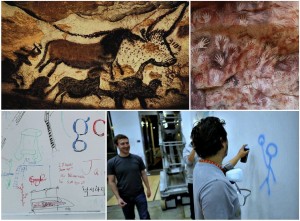
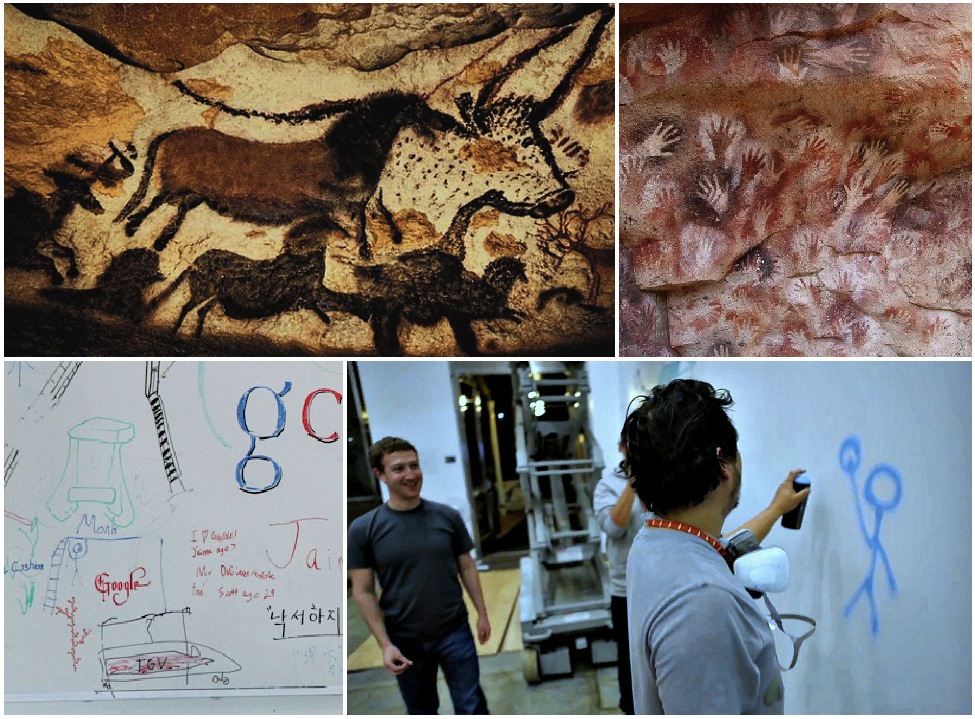
- Wall art. Going 'tribal' on the walls -- by hanging posters, painting a mural, or just writing on it -- is another classic ritual used to signal a collective spirit in the office.
- Parties and other extracurricular activities. Examples include movie nights, concerts, sporting events, progressive dinner parties, and book discussion groups. As one of my teammates put it, "You don't discuss books with your coworkers; you discuss them with your friends."
- Founders and other top leaders as cult figures
- Middle managers as priests (tending to the flock, hearing confessions during 1:1s?)
- How the transition from startup to big company mirrors the stages of religious evolution
- Mission statements and corporate values as an articulation of shared (quasi-)religious beliefs (e.g. "Don't be evil.")
- How religion can become an instrument of social control by those in power
- Evangelism and recruiting
- Rituals of sacrifice
- World-rejection as a driving force
- Founding story as creation myth
"Religions often maintain intragroup solidarity by requiring costly behavioral patterns of group members. The performance of these costly behaviors signals commitment and loyalty to the group and the beliefs of its members. Thus, trust is enhanced among group members, which enables them to minimize costly monitoring mechanisms that are otherwise necessary to overcome the free-rider problems that typically plague collective pursuits." [From Signalling, Solidarity, and the Sacred, the best 10 pages I've read all year.]
Religion is, of course, a tricky proposition. If you take inspiration from religion's playbook, just make sure it's not the page on orthodoxy. Once your community decides that some beliefs are wrong (and punishable!), all hope for acquiring knowledge is lost. To succeed in the risky, uncertain world a startup inhabits, you need a community of free-thinkers, not true-believers. Endnotes [1] I'm not the first to identify "tribes" as a useful metaphor. Seth Godin (Tribes) and Dave Logan (Tribal Leadership), for example, have built whole books around the term. I'm just pointing out that the formal study of tribes, i.e. anthropology, can shed light on what goes on at a startup. [2] Cultural guidebooks: Bridgewater, Netflix, Valve, and Zappos (see also Delivering Happiness). [3] There are many other ways to slice up cultural space, for those who enjoy such things. E.g.:- Steve Yegge on liberal vs. conservative engineering practices
- Edward T Hall's high context vs. low context cultures
- Robert Cringely's commandos vs. infantry vs. police
5 Comments
There is a certain limit to 3rd culture positivism, I guess. Our "tribe membership" with respect to a company is both a serious aspect of our lives ( we live in a civilization organized around industrial production and globalized trade ), but it is also contingent and ironic, something which can hardly be claimed from family relationships growing into tribal structures. No matter how collective identity is shaped by a company we can leave it any time for another one and immerse into its "culture" and we know it. A company may be synthesized as a tribe with all the elements listed in the article but at the same we aware it is none.
Going even further one might ask if the tribal holism isn't basically an upper management illusion we should believe in, something which requires a "Gervais Principle" sort of deconstruction, instead of believe-making in the consistency of the concept, powered by all sorts of references from sociology and ethnology, which is going to produce only more "clueless" middle management guys. "Culture" smoothes out the fundamental pathologies of the corporate organization by idealizing it, creating a human interface to the mundane activity of working for money, extracting profit and solving conflicts among adults following their own interests.
Tsk, tsk. Such cynicism. Let me guess: "I'm a software engineer, it's my job to be cynical. Otherwise I'd just be sitting around saying 'I don't understand, it should just work.'"
All culture is grounded in seemingly mundane activities (eating, chatting with friends, walking, falling ill, being married, etc.) so there is nothing distinctive about corporate culture on that score. Moreover, culture allow conflicts to be articulated and dramatised as much as smoothed over.
Of course, plenty of technology companies can appear very "happy clappy". However, a company trying to succeed purely by creating a shared, warm, fuzzy feeling is like a marriage being based purely on being in love: it may be fun, but it won't be strong enough to survive misfortune. How a company deals with conflict is a mark of its character, and that's something that's very hard to fake.
As Kay says, though, people joining a start-up generally aren't in it for life. Hence, the company can't now be a "total institution", no matter how hard it tries. (Most are smart enough not to try.) This distinguishes a start-up from a genuine tribe.
Start-ups come out of "scenius" more than individual genius, so loose affiliation -- especially between people in different organisations -- is as important as close comradeship. (Dumb, obvious examples would be found among the companies founded by disillusioned ex-members of big, famous software companies. More interesting examples are in the tangled "family tree" of search-related companies in Cambridge.)
Establishing loose connections and acquaintances also involve "high cost signalling", although the costs have normally been occurred well before the benefits appear. Two people middle-age men who misspent their respective youths messing around with some obscure 80s home computer will, even on first meeting, quickly be able to have conversations that will baffle to outsiders ("The guy who wrote the manual is now an algebraic topologist", etc.)
Here's a more extreme case (from Mary Carruthers, "The Craft of Thought"): "[...] the 'neck verse' of late medieval England, [...] enabled someone to escape hanging provided he could recite or read a verse of the Bible [...] The content of the verse was almost immaterial; what counted was the articulation of someone's 'common ground' with an educated class, who were immune from hanging because of legal custom."
Where I disagree with Kevin is in his distinction between free thinkers and true believers. Richard Wagner famously used the pseudonym Karl Freigedanken (trans: Charles Freethoughts). I could tell you about what he wrote under that name, but if you look it up you'll see why "free-thinking" can be as morally dubious as anything else. "He that hath ears to hear," as we say, "let him hear."
This was a fascinating read on startups. The section on the importance of rituals was especially eye-opening. Thanks for sharing it!
Kate
http://katemats.com
This is a fascinating topic and excellent article. As startups grow and they add new people, it becomes more and more important to formalize the culture and make sure that new recruits "get it." I have been part of a couple of start-ups where new teams of "adults" or "experts" were brought in and it immediately changed the culture for the worse in both cases the companies never recovered. Don't underestimate the power of great corporate culture!
well y'all be too smart for yer own britches.