
Design and Architecture
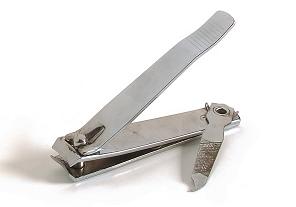
This is a modern nail clipper. It was invented, it appears, by Chapel Carter in 1896. Ask yourself, which elements of this object reflect design, and which elements represent architecture. I am going to offer a fairly clean distinction for you to ponder, but I'd like you to make up your own mind first. You don't have to be a mechanical engineer or any sort of engineer, architect, artist or designer to answer. Just go with your intuitive sense of those terms, and apply them. These ideas also apply to organizational and social design and architecture.
 This piece grew out of an interesting bit of crossfire on Twitter a few days ago. It began when I said:
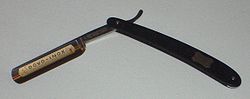
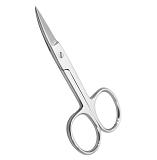 The basic problem can be framed quite easily in mechanical engineering terms: you want a device that is safer than the razor, eliminates the uncomfortable ring handles of the nail scissors, requires less skill to use than either, and requires no maintenance (unlike razors, which require periodic sharpening).
Our hypothetical, uncreative 1890s engineer thinks a little and decides he likes the twin cutting edges of the scissors for safety. To function at less-than-razor sharpness, this approach requires leverage (the ratio of delivered to applied force) of more than one, so a small force can be amplified. So looking up his engineering textbook, he realizes that only Class 1 (scissor) and Class 2 (nutcracker) levers work. Class 3 (sugar tong) levers won't work because they provide leverage of less than one. So his two basic classes of design are:
The basic problem can be framed quite easily in mechanical engineering terms: you want a device that is safer than the razor, eliminates the uncomfortable ring handles of the nail scissors, requires less skill to use than either, and requires no maintenance (unlike razors, which require periodic sharpening).
Our hypothetical, uncreative 1890s engineer thinks a little and decides he likes the twin cutting edges of the scissors for safety. To function at less-than-razor sharpness, this approach requires leverage (the ratio of delivered to applied force) of more than one, so a small force can be amplified. So looking up his engineering textbook, he realizes that only Class 1 (scissor) and Class 2 (nutcracker) levers work. Class 3 (sugar tong) levers won't work because they provide leverage of less than one. So his two basic classes of design are:
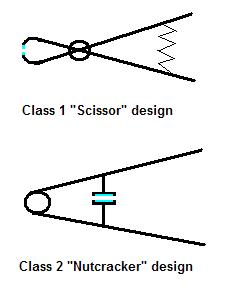 The first is basically a complication of the scissor idea: turn the blades ninety degrees and shape them to conform to human nails, and add a spring-action return to eliminate the need for the rings. The second needs cutting surfaces oriented like scissors, since you can't shove your finger through the coil spring at the other end. If you are a mechanical engineer, and work through the details, you will realize that both textbook designs are ugly as hell: once you add all the joints and linkages, there are more parts and more failure modes than either the razor or the scissors (I recall a machine design textbook, I forget which one, which used the same nail-clipper example and had a sketch of a ridiculous "full" textbook design to make the point that design involves more than blindly applying the theory of simple machines). They also display low symmetry, a point that is significant.
Now we turn to our fictionalized version of Chapel Carter. Let's pretend he got an Aha! insight. He too, starts down the path of basic Class 1 and Class 2 lever designs, but then he gives up on seeing the ugliness. He then follows this right-brained process:
The first is basically a complication of the scissor idea: turn the blades ninety degrees and shape them to conform to human nails, and add a spring-action return to eliminate the need for the rings. The second needs cutting surfaces oriented like scissors, since you can't shove your finger through the coil spring at the other end. If you are a mechanical engineer, and work through the details, you will realize that both textbook designs are ugly as hell: once you add all the joints and linkages, there are more parts and more failure modes than either the razor or the scissors (I recall a machine design textbook, I forget which one, which used the same nail-clipper example and had a sketch of a ridiculous "full" textbook design to make the point that design involves more than blindly applying the theory of simple machines). They also display low symmetry, a point that is significant.
Now we turn to our fictionalized version of Chapel Carter. Let's pretend he got an Aha! insight. He too, starts down the path of basic Class 1 and Class 2 lever designs, but then he gives up on seeing the ugliness. He then follows this right-brained process:
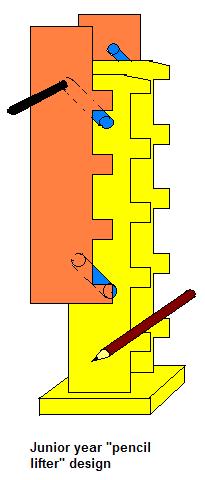 The dimensions and distances are not accurate, but the rough idea is that the pair of outer, orange plates moves in circles on the blue arms, staying parallel and aligned with respect to the fixed, yellow inner plates. As you turn the outer plates using the black handle, the pencil moves up one level at a time, until it hits the top level, which is sloped, allowing the pencil to fall down. I was rather pleased with myself, and my team-mate and I produced a prototype out of some spare perspex we found in the shop, using glue and wooden dowels to put the whole thing together. If you can't visualize roughly how the thing works, never mind. It was flimsy, but it worked.
We won a "special mention," but the design that won first place was a much more robust and straightforward application of a pulley and a four-bar mechanism (I forget the details), and a neat gripper that could pick a pencil off the floor, rather than requiring it to be in a special location like our design. It worked beautifully. A lot of people looked at our design and were intrigued by the cleverness of the basic idea, but didn't take the design seriously. The winner though, had both clean design and great architecture, and unlike our design, did not make the idea too simple and subservient to a single clever "trick." We were so happy with our clever idea, that we missed thinking through some basic features that would be useful in the solution, like being able to pick up a pencil from any surface, and other things that would matter in practice, like putting a pair of heavy and large plates on two rotor arms. We also jumped too quickly to "insight" rather than doing enough preparatory thinking with basic machine design principles, and evaluating the full "vocabulary" of elements like pulleys, belts, four-bar mechanisms and so forth. We got simplicity and elegance, yes, but at the cost of a fully-functional solution.
Design and Architecture Defined
Design is the process of seeing an ambiguous problem through the lens of a specific organizing insight and a set of self-imposed design principles both of which can be domain-independent.
Each element in the 'design' definition is critical:
The dimensions and distances are not accurate, but the rough idea is that the pair of outer, orange plates moves in circles on the blue arms, staying parallel and aligned with respect to the fixed, yellow inner plates. As you turn the outer plates using the black handle, the pencil moves up one level at a time, until it hits the top level, which is sloped, allowing the pencil to fall down. I was rather pleased with myself, and my team-mate and I produced a prototype out of some spare perspex we found in the shop, using glue and wooden dowels to put the whole thing together. If you can't visualize roughly how the thing works, never mind. It was flimsy, but it worked.
We won a "special mention," but the design that won first place was a much more robust and straightforward application of a pulley and a four-bar mechanism (I forget the details), and a neat gripper that could pick a pencil off the floor, rather than requiring it to be in a special location like our design. It worked beautifully. A lot of people looked at our design and were intrigued by the cleverness of the basic idea, but didn't take the design seriously. The winner though, had both clean design and great architecture, and unlike our design, did not make the idea too simple and subservient to a single clever "trick." We were so happy with our clever idea, that we missed thinking through some basic features that would be useful in the solution, like being able to pick up a pencil from any surface, and other things that would matter in practice, like putting a pair of heavy and large plates on two rotor arms. We also jumped too quickly to "insight" rather than doing enough preparatory thinking with basic machine design principles, and evaluating the full "vocabulary" of elements like pulleys, belts, four-bar mechanisms and so forth. We got simplicity and elegance, yes, but at the cost of a fully-functional solution.
Design and Architecture Defined
Design is the process of seeing an ambiguous problem through the lens of a specific organizing insight and a set of self-imposed design principles both of which can be domain-independent.
Each element in the 'design' definition is critical:
This piece grew out of an interesting bit of crossfire on Twitter a few days ago. It began when I said:
"Am realizing I enjoy design, but not architecture. Design is the 'play' subset of 'architecture.'"
This provoked an instant response from @jrdotcom, a software guy I know:@vgr In software, there is no difference between design & architecture. They are just words that non-programmers have invented.
After a bit of back and forth thesis-antithesis, another guy I know, @jbsil01, also a software guy, offered a partial synthesis:@vgr as a programmer, design can mean the same thing as architecture. as a user, architecture should be irrelevant to design.
Reflecting on the exchange, I realized that all three positions bother me. My own remark is too flippant, clearly. But @jrdotcom's position, that there is no substantive distinction, that this is all pointy-haired-boss-speak, at least in software (and I have heard similar views from other sorts of engineers) is too dismissive of the importance of language. And finally, @jbsil01's reliance on subjective user experience as a fundamental filter to tease the two apart is too pragmatic and operational. So let's dig deeper. I'll frame my discussion in terms of engineering, but this applies, mutatis mutandis to other synthesis fields which mix utilitarian intents with aesthetic ones. The Distinction Here's the distinction.- Packet switching is a design. For non-techies, this is the idea of a network-of-networks that moves things around after chopping them up into standardized pieces that may travel different routes between the same end points.
- TCP/IP (the basic set of protocols that run the Internet) is an architecture that realizes that design in the domain of inter-networking software
- Containerization is an architecture that realizes that design in the domain of multi-modal cargo transport (sea, rail and road)
The basic problem can be framed quite easily in mechanical engineering terms: you want a device that is safer than the razor, eliminates the uncomfortable ring handles of the nail scissors, requires less skill to use than either, and requires no maintenance (unlike razors, which require periodic sharpening).
Our hypothetical, uncreative 1890s engineer thinks a little and decides he likes the twin cutting edges of the scissors for safety. To function at less-than-razor sharpness, this approach requires leverage (the ratio of delivered to applied force) of more than one, so a small force can be amplified. So looking up his engineering textbook, he realizes that only Class 1 (scissor) and Class 2 (nutcracker) levers work. Class 3 (sugar tong) levers won't work because they provide leverage of less than one. So his two basic classes of design are:
The first is basically a complication of the scissor idea: turn the blades ninety degrees and shape them to conform to human nails, and add a spring-action return to eliminate the need for the rings. The second needs cutting surfaces oriented like scissors, since you can't shove your finger through the coil spring at the other end. If you are a mechanical engineer, and work through the details, you will realize that both textbook designs are ugly as hell: once you add all the joints and linkages, there are more parts and more failure modes than either the razor or the scissors (I recall a machine design textbook, I forget which one, which used the same nail-clipper example and had a sketch of a ridiculous "full" textbook design to make the point that design involves more than blindly applying the theory of simple machines). They also display low symmetry, a point that is significant.
Now we turn to our fictionalized version of Chapel Carter. Let's pretend he got an Aha! insight. He too, starts down the path of basic Class 1 and Class 2 lever designs, but then he gives up on seeing the ugliness. He then follows this right-brained process:
- Out on a walk, he watches a cat catch and bite a mouse, and marvels at the compactness of the cat's head. Suddenly, he realizes that the cat's jaws are a two-cutting-edge class 3 lever, which he had eliminated. The muscles providing the forces operate between the fulcrum (the jaw hinge) and the cutting points.
- He ponders more, and realizes that by using pull forces from muscles, animal jaws achieve great compactness, and the Class 3 structure achieves high symmetry and an open-mouth design. But the design wouldn't work for nail-clippers because there is no easy way for a human to exert forces that way, and the leverage would be less than one (which doesn't matter for jaws, since jaw muscles are strong, teeth are sharp, and food is softer than nails).
- He lets the problem simmer in his mind, and then one night, he leaps out of bed shouting "Eureka!" He has thought of a curious way to combine a class 1 lever with a class 3 lever which might apply to his problem. The idea is clever, but now has lots more moving parts and two levers where other designs have one.
- Still, he is so enamoured of his clever insight that he continues thinking about it, even though it seems too complicated on the surface.
- And again, in a flash of insight, he figures out how the whole thing can be done with only 3 parts, so long as he is willing to make some odd-shaped parts. His leap of faith that two levers would in the end lead to a more compact design is validated.
- Some weeks of trial-and-error later, he has the design we use today.
The dimensions and distances are not accurate, but the rough idea is that the pair of outer, orange plates moves in circles on the blue arms, staying parallel and aligned with respect to the fixed, yellow inner plates. As you turn the outer plates using the black handle, the pencil moves up one level at a time, until it hits the top level, which is sloped, allowing the pencil to fall down. I was rather pleased with myself, and my team-mate and I produced a prototype out of some spare perspex we found in the shop, using glue and wooden dowels to put the whole thing together. If you can't visualize roughly how the thing works, never mind. It was flimsy, but it worked.
We won a "special mention," but the design that won first place was a much more robust and straightforward application of a pulley and a four-bar mechanism (I forget the details), and a neat gripper that could pick a pencil off the floor, rather than requiring it to be in a special location like our design. It worked beautifully. A lot of people looked at our design and were intrigued by the cleverness of the basic idea, but didn't take the design seriously. The winner though, had both clean design and great architecture, and unlike our design, did not make the idea too simple and subservient to a single clever "trick." We were so happy with our clever idea, that we missed thinking through some basic features that would be useful in the solution, like being able to pick up a pencil from any surface, and other things that would matter in practice, like putting a pair of heavy and large plates on two rotor arms. We also jumped too quickly to "insight" rather than doing enough preparatory thinking with basic machine design principles, and evaluating the full "vocabulary" of elements like pulleys, belts, four-bar mechanisms and so forth. We got simplicity and elegance, yes, but at the cost of a fully-functional solution.
Design and Architecture Defined
Design is the process of seeing an ambiguous problem through the lens of a specific organizing insight and a set of self-imposed design principles both of which can be domain-independent.
Each element in the 'design' definition is critical:
- Domain Indepedence: Design ideas come from novel ways of seeing, and rely on similarity of sensory patterns. These can clearly transcend specific domains. From where we stand, a set of seven stars happens to look like a "Big Dipper." Design is conceptually pretty much always visual. Design arising out of ways of hearing or touching are rarer.
- Organizing Insight: At the heart of every great engineering artifact, there is usually at least one powerful organizing insight, often borrowed from an unrelated domain via a metaphor (jaws for nail clippers) or abstraction ("packet" in networks). This organizing insight plucks out a small and fertile region of a large design space to explore. If the insight is validated, it usually buys you a lot of simplification (in an absolute, information-theoretic sense in fact, but I won't belabor that point; just think of it as "elegance"). A familiar example: the "organizing insight" of Southwest is "compete with driving and buses, not other airlines."
- Design Principles: The laws of physics, customer requirements and engineering best practices are a basic set of constraints. But design usually involves imposing further constraints on yourself. These are not those vague ideas like "simplicity" or "elegance." These are more specific commitments like "fewest possible moving parts." Design principles can also be domain-independent. For example Southwest Airlines applies the idea of "fleet homogeneity" (only fly 737 aircraft). This is derived from the general principle: "use identical parts to serve identical functions." This principle has a lot of benefits, but also some problems: an entire country devoting its agricultural land to one crop leaves itself vulnerable to disease (think potatoes and Ireland). Heterogeneity and diversity, the other end of the spectrum, present different benefits and costs. The point is, design principles commit to tradeoff points as a matter of principle, not out of an intent to optimize something. Optimization is in the realm of architecture. Trade-off points chosen as design principles represent leaps of faith.
- Domain-specificity:You cannot go from the abstract idea of "packet" to a communication network, or from a clever observation about cat's jaws to a nail clipper, without knowing a good deal about how things are built in the domain. Architecture is a domain-specific skill.
- Laws and Components: Every domain has hard and soft laws (you shouldn't attempt to build a perpetual motion machine for instance (hard) or leave sharp edges exposed (soft)), and a vocabulary that evolves organically from reusable pieces of previous successful designs: fragments of design DNA that are known to work. The four-bar mechanism in machine design, the model-view-controller pattern in software architecture, and the RLC oscillator circuit in electrical engineering are all examples. Many design-oriented thinkers have great ideas but a very poor vocabulary, which leads to clumsy architecture. In more self-contained artistic domains like graphic design, the 'architecture' element can be found in principles of color matching and layering, specific painting techniques and so forth.
- Finishing: Architecture must also finish a design, because design only makes some of the commitments required for a completed artifact. For the completion, the design principles guide the architecture part of the way (so the "elegance" of the insight is extrapolated to other aspects of the artifact). But there are always parts of the architecture about which the organizing design insight has nothing to say. Many clever ideas for Websites, for instance, ignore security concerns. Designers usually have nothing to say about it, but architects do. This part of "finishing" is provided by best practice principles from the domain itself. Securing TCP/IP and securing containers in shipping are likely not similar in any way (except by accident).
- Intrinsic logic: Design insights impose a very powerful organizing force on an engineering artifact, usually from outside the domain. For example, the desktop metaphor for computer screen GUIs is very powerful. Left unchecked, it could lead to all sorts of bad architectural commitments. Similarly domain best practices create a powerful opposed force from within the domain. A critical function of architecture is to contain the greed of the design, and limit the influence of the domain, and create enough harmony in the whole artifact that it acquires an intrinsic logic. In the end product, architecture should rule, not design or domain. This is what allows artifacts to become unique. So TCP/IP and container shipping, despite sharing an organizing insight, are architecturally coherent in very different ways.
5 Comments
There's plenty of room for debate about where architecture begins and design ends. But "get it right by version 3?" Is not a Microsoft paradigm. It's more like "Finally get it functional by version 3, then screw it up completely in version 4, then spend the next 3 version trying to get customers to calm down and just use it."
Examples of version 4 would be MS-DOS 4 and Windows ME.
I think there was a shared first prize for that competition, and we were one of them, I guess you're talking about the other team. Our design had a rack affixed to the slider, and the lifter was on a pinion which was mounted on the slider but with a press fit. Blocks stopped the pinion assembly toward the ends of the slider motion which made the rack turn the pinion. This moved the lifter in opposite directions at the two ends (lifting pencil and bottom and releasing it at top).
@saurabh I may be completely misremembering or mashing up details of different designs that came up, so not sure. I vaguely recall your design too. So yeah, my bad for misremembering winner details of the contest :)
Fun times. Last bit of "real" mechanical engineering I ever did. Moved on to controls after that, which is probably the most truly portable engineering subject.
@irv No comment. I have no good reason to defend Microsoft, but they must be doing something right to explain their survival. I zoomed in on the much-remarked V 3.0 phenomenon, but possibly I've read that wrong, and their DNA is elsewhere.
love your pencil lifter. rest of the article is junk. language matters, but nitpicking does not. as a mathematician i am quite annoyed when ppl want to distinguish between theorem, lemma and corollary for instance. if you can prove mean value theorem then rolle's is just corollary. otherwise treat rolle's as the theorem and mean value is just lemma. otherwise treat something bigger like mvt in 2space as your theorem, then mvt and rolle's become lemmas. but why get so cranky about which is which. depending on which book you use, one becomes lemma and other becomes theorem or corollary. btw to claim tcp is architecture and not design when ms is doing design at the level of market timing heh heh quite dodgy.
Carter didn't invent the nail clipper; there were at least 2 patents by different people years before his. http://en.wikipedia.org/wiki/Nail_clipper