
How to Measure Information Work
Continuing my exploration of information overload, in this piece, I'll further develop the argument that it is not the real problem, but a mis-framing of a different problem (call it X) that has nothing to do with "overload" of any sort. Most people who start their thinking with the "information overload" frame look outward at the information coming at them. One aspect of the real problem is terrible feedback control systems for looking inward at your work. On the feedback side of things, we measure capacity for work with the wrong metric (headcount, or in shorthand managerese, "HC"). I'll explain why HC is terrible at the end of this piece (and I've also written a separate article on HC).
So, can you measure information work? Yes. Here is a graph, based on real data, showing the real cumulative quantity of information work in my life during two years and some months of my life, between January 2004 and about March 2006.
[caption id="attachment_408" align="aligncenter" width="500"]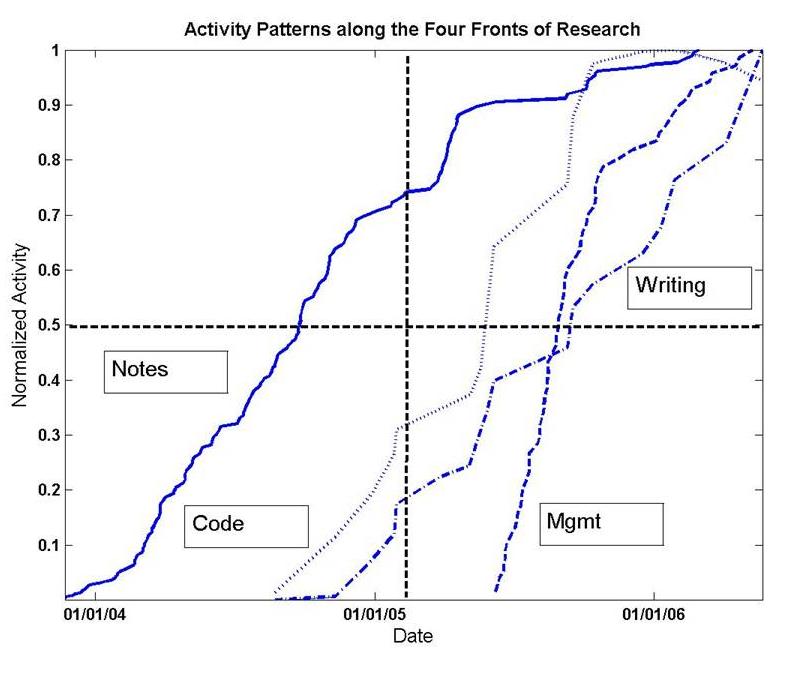 Figure 1: Quantity of work over one year[/caption]
Calibrating Work in the Raw
Figure 1 is all about calibrating your measurement systems. The first thing you've got to understand about measuring information work is that at the ground level, one size does not fit all. There are ways to abstract away from the specific nature of your work, which I'll get to, but you still need to understand it first. The measurement methods I'll talk about later rely on data artifacts generated by meta-work (stuff like to-do lists and calenders). But meta-stuff must be calibrated against what it talks about. A typical next-step in your life may be an hour long, while one in my life may be five minutes. You won't know until you look.
Every sort of information work transforms some sort of information artifact into some other sort of information artifact. Paul Erdos famously defined mathematics as the process of turning coffee into theorems, so in his case plotting gallons of coffee against number of theorems proved might have worked as a first pass.
My graph above reflects throughput patterns within my particular style of academic engineering research in modeling and simulation during that particular period (I was a postdoc at Cornell during this time). Coffee at Stella's in College Town got transformed into written notes. Notes got transformed, in this case, into computer code with which I ran experiments, which produced data files. The data then got transformed to research output documents (papers and presentations). Here's how I measured this throughput, each artifact in its own unit, with the cumulative total at the end of the year normalized to 1:
Figure 1: Quantity of work over one year[/caption]
Calibrating Work in the Raw
Figure 1 is all about calibrating your measurement systems. The first thing you've got to understand about measuring information work is that at the ground level, one size does not fit all. There are ways to abstract away from the specific nature of your work, which I'll get to, but you still need to understand it first. The measurement methods I'll talk about later rely on data artifacts generated by meta-work (stuff like to-do lists and calenders). But meta-stuff must be calibrated against what it talks about. A typical next-step in your life may be an hour long, while one in my life may be five minutes. You won't know until you look.
Every sort of information work transforms some sort of information artifact into some other sort of information artifact. Paul Erdos famously defined mathematics as the process of turning coffee into theorems, so in his case plotting gallons of coffee against number of theorems proved might have worked as a first pass.
My graph above reflects throughput patterns within my particular style of academic engineering research in modeling and simulation during that particular period (I was a postdoc at Cornell during this time). Coffee at Stella's in College Town got transformed into written notes. Notes got transformed, in this case, into computer code with which I ran experiments, which produced data files. The data then got transformed to research output documents (papers and presentations). Here's how I measured this throughput, each artifact in its own unit, with the cumulative total at the end of the year normalized to 1:
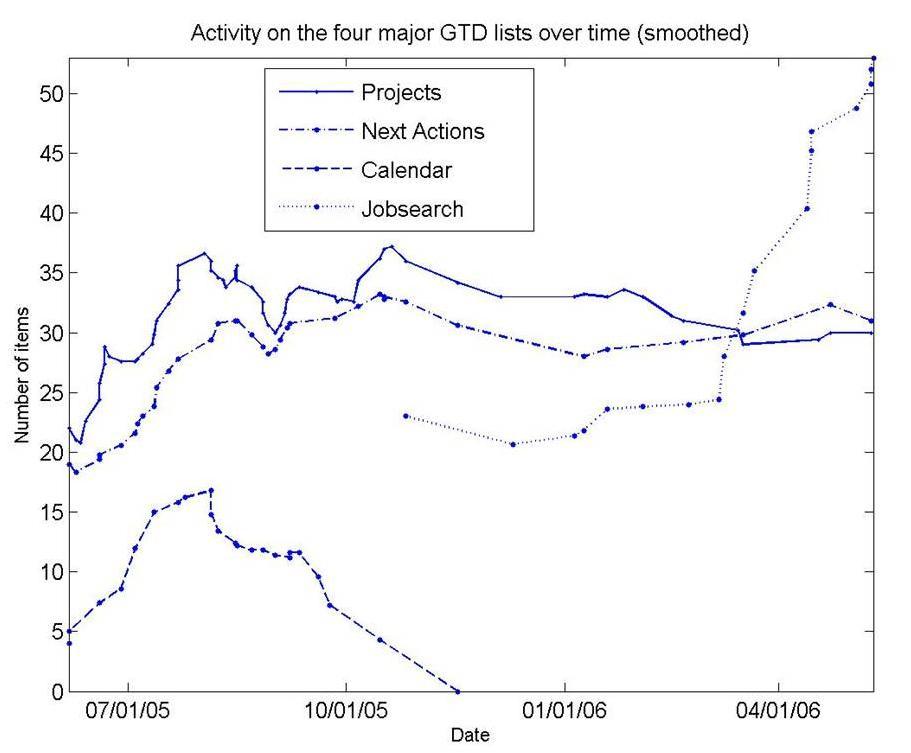 Figure 2: Meta-Work Trends for GTD system[/caption]
Here are some highlight points for you to ponder:
Figure 2: Meta-Work Trends for GTD system[/caption]
Here are some highlight points for you to ponder:
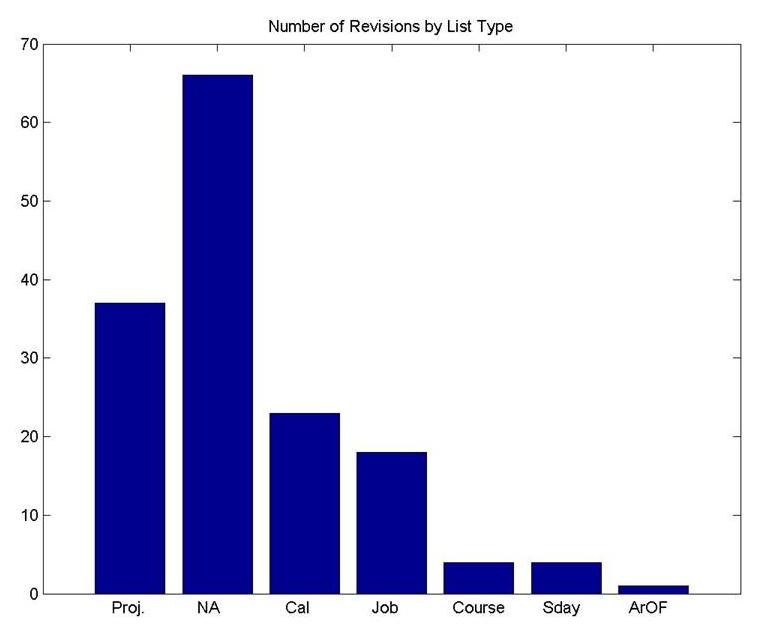 Figure 3. Measuring churn in your life[/caption]
To understand how churn in your meta-data maps to productivity in your ground-level data, you need to analyze and interpret. In this case, you see the profile of a fairly healthy execution-oriented phase of my life, with very little questioning of Big Life Priorities. My Areas of Focus list (which is a high-level list containing stuff like "Work, Family, Health") barely got touched. I clearly was focused on the now rather than the future, since there was little daydreaming showing up as someday/maybe.
What might an analysis of an angsty teenager's life reveal? The meta-data you might have to look at there would be different, since angsty teenagers typically don't use organization systems. iTunes downloads (lots of death metal?) and books bought/checked out from libraries might work. Those might reveal deep questioning at fundamental levels. Cell phone bills and Facebook feeds would work today.
I got these graphs through some laborious data entry, going through all my saved historical lists, but for real-time feedback, most of the time you actually need very little information -- you just need to keep one eye on the length of your lists, another on the amount of churn, and the third (yes, we're going meta here, you'd better have a third eye like Siva) on whether your systems need recalibration with respect to your ground-level work.
Measurement, Control and Information Overload
Let's bump back up to the theme of information overload and how the idea of measuring your work relates to it.
The connection is simple. If you have a good, noise-free and accurate sense of what's going on with your work, in a throughput sense, you'll have a very accurate idea of how much information you need, of what sorts, and when.
This will give you the confidence to control the flow. You have always had the ability (ranging from the nuke/delete all/mark-all-as-read buttons, to more selective filtering tools), but it is the confidence and trust in your sense of the state of your work that will give you the courage to use the levers available to you. Focusing on the efficiency of filtration/recommendation systems is pointless -- the state of the art is good enough already in most ways. The real bottleneck is the inefficiency of measurement on the demand side.
Of course, this has been a story told around some selected highlights of a complex period of my life, so there is a lot I didn't tell you, but a word to the wise is sufficient. Look inward at your work-hunger before you look outward at the information buffet out there.
A Footnote on Headcount
Okay, I couldn't resist that bad pun. I promised to explain why headcount is a stupid way to measure capacity for information work (though it is a smart way of measuring some other stuff).
The answer is as old as Frederick Brook's The Mythical Man Month, the classic about managing programming projects. Programming is the prototypical type of individual-level information work. Brooks noted that unlike in manufacturing, adding headcount to a delayed software project delays it further, rather than speeding it up, as a naive "headcount" model might suggest. In software, it actually makes more sense to ask at an individual level whether potential new team members will speed things up or slow things down.
What's happening here, and why do we still use HC? The specific reason in programming generalizes. Software people know that a good developer will outperform a mediocre one by orders of magnitude, so the "interchangeable parts" idea fails a basic sanity test. The other reason is that information work is so collaborative and creative that more people adds more interactions, and much of the complexity lies in managing interactions, and the extra contributions must first work off that interaction overload deficit.
So why do we still use HC in corporate capacity planning around information work, besides force of habit from the manufacturing era?
The answer is simple -- HC isn't used for planning at all. It is used for signaling priorities and formal assignment. If I tell you that you are 50% on two projects, that is actually just a signal telling you that your output on both fronts better be comparable in magnitude, and that your overall performance had better be at least average, compared to your peers. Effort fractions work better for doing this than simply saying you are on these three projects in this order of priority, because it signals how abstract priority translates to value delivery expected.
Used this way, HC has nothing to do with the content of work and how long it might take to do it. I talked about this sort of stuff at length in a previous piece on talent management. You and I can't fix corporate management systems overnight, so what can you do to manage capacity and commitment levels? That's the control story, which I'll get to one of these days.
Figure 3. Measuring churn in your life[/caption]
To understand how churn in your meta-data maps to productivity in your ground-level data, you need to analyze and interpret. In this case, you see the profile of a fairly healthy execution-oriented phase of my life, with very little questioning of Big Life Priorities. My Areas of Focus list (which is a high-level list containing stuff like "Work, Family, Health") barely got touched. I clearly was focused on the now rather than the future, since there was little daydreaming showing up as someday/maybe.
What might an analysis of an angsty teenager's life reveal? The meta-data you might have to look at there would be different, since angsty teenagers typically don't use organization systems. iTunes downloads (lots of death metal?) and books bought/checked out from libraries might work. Those might reveal deep questioning at fundamental levels. Cell phone bills and Facebook feeds would work today.
I got these graphs through some laborious data entry, going through all my saved historical lists, but for real-time feedback, most of the time you actually need very little information -- you just need to keep one eye on the length of your lists, another on the amount of churn, and the third (yes, we're going meta here, you'd better have a third eye like Siva) on whether your systems need recalibration with respect to your ground-level work.
Measurement, Control and Information Overload
Let's bump back up to the theme of information overload and how the idea of measuring your work relates to it.
The connection is simple. If you have a good, noise-free and accurate sense of what's going on with your work, in a throughput sense, you'll have a very accurate idea of how much information you need, of what sorts, and when.
This will give you the confidence to control the flow. You have always had the ability (ranging from the nuke/delete all/mark-all-as-read buttons, to more selective filtering tools), but it is the confidence and trust in your sense of the state of your work that will give you the courage to use the levers available to you. Focusing on the efficiency of filtration/recommendation systems is pointless -- the state of the art is good enough already in most ways. The real bottleneck is the inefficiency of measurement on the demand side.
Of course, this has been a story told around some selected highlights of a complex period of my life, so there is a lot I didn't tell you, but a word to the wise is sufficient. Look inward at your work-hunger before you look outward at the information buffet out there.
A Footnote on Headcount
Okay, I couldn't resist that bad pun. I promised to explain why headcount is a stupid way to measure capacity for information work (though it is a smart way of measuring some other stuff).
The answer is as old as Frederick Brook's The Mythical Man Month, the classic about managing programming projects. Programming is the prototypical type of individual-level information work. Brooks noted that unlike in manufacturing, adding headcount to a delayed software project delays it further, rather than speeding it up, as a naive "headcount" model might suggest. In software, it actually makes more sense to ask at an individual level whether potential new team members will speed things up or slow things down.
What's happening here, and why do we still use HC? The specific reason in programming generalizes. Software people know that a good developer will outperform a mediocre one by orders of magnitude, so the "interchangeable parts" idea fails a basic sanity test. The other reason is that information work is so collaborative and creative that more people adds more interactions, and much of the complexity lies in managing interactions, and the extra contributions must first work off that interaction overload deficit.
So why do we still use HC in corporate capacity planning around information work, besides force of habit from the manufacturing era?
The answer is simple -- HC isn't used for planning at all. It is used for signaling priorities and formal assignment. If I tell you that you are 50% on two projects, that is actually just a signal telling you that your output on both fronts better be comparable in magnitude, and that your overall performance had better be at least average, compared to your peers. Effort fractions work better for doing this than simply saying you are on these three projects in this order of priority, because it signals how abstract priority translates to value delivery expected.
Used this way, HC has nothing to do with the content of work and how long it might take to do it. I talked about this sort of stuff at length in a previous piece on talent management. You and I can't fix corporate management systems overnight, so what can you do to manage capacity and commitment levels? That's the control story, which I'll get to one of these days.
Figure 1: Quantity of work over one year[/caption]
Calibrating Work in the Raw
Figure 1 is all about calibrating your measurement systems. The first thing you've got to understand about measuring information work is that at the ground level, one size does not fit all. There are ways to abstract away from the specific nature of your work, which I'll get to, but you still need to understand it first. The measurement methods I'll talk about later rely on data artifacts generated by meta-work (stuff like to-do lists and calenders). But meta-stuff must be calibrated against what it talks about. A typical next-step in your life may be an hour long, while one in my life may be five minutes. You won't know until you look.
Every sort of information work transforms some sort of information artifact into some other sort of information artifact. Paul Erdos famously defined mathematics as the process of turning coffee into theorems, so in his case plotting gallons of coffee against number of theorems proved might have worked as a first pass.
My graph above reflects throughput patterns within my particular style of academic engineering research in modeling and simulation during that particular period (I was a postdoc at Cornell during this time). Coffee at Stella's in College Town got transformed into written notes. Notes got transformed, in this case, into computer code with which I ran experiments, which produced data files. The data then got transformed to research output documents (papers and presentations). Here's how I measured this throughput, each artifact in its own unit, with the cumulative total at the end of the year normalized to 1:
- NOTES: The cumulative number of pages in my research notes files. This is the best measure of "ideation" activity I could find.
- CODE: The megabytes of code and data in my working programming folders. This is one coarse measure of the amount of actual "work" being accumulated in computing work (today, I'd use a code repository and count check-ins)
- WRITING: The megabytes of working documentation in my computer "research" project folder. This measures the rate at which the "work" in 2 is being converted to completed output such as "papers" or "presentations"
- MGMT: This graph shows the accumulation of workflow management collateral data, such as to-do lists. In this case, I was using a tweaked version of David Allen's Getting Things Done model (once the project got to a phase where I needed to get management overhead out of my head).
- Calibrating flows of information work requires an ethnographer's eye for local detail and narrative, combined with a data-miner's enthusiasm for diving in and examining the concrete artifacts of information work.
- You do have to actually look at real data, at least loosely. Sketching out graphs like the ones above hypothetically, based on your memory, or guessing based on how you think you work, measures your assumptions and biases, not your work.
Figure 2: Meta-Work Trends for GTD system[/caption]
Here are some highlight points for you to ponder:
- The number of next-actions stays fairly constant after an initial upswing as ‘collection' habits become more efficient.
- This coarse look at the data does not reveal ‘task churn' - the addition and deletion of tasks, a typical list-re-edit changes something between one task to a third of the entire list.
- Note that during the first half, calendar activity is present, but this vanishes in the second half. Like many full-time postdoctoral researchers, my "hard landscape" of calendered activities was mostly completely empty when I was not teaching. Barring meeting with students at scheduled times, I rarely had any time constraints. A busy MD's data would look very different, with a lot of calendar activity.
- I got married on August 12, 2005 and moved into a new apartment on August 14 and 15 - the time coincides with the peak in calendar activity. Around that time, I was also submitting several papers to conferences and getting started with new students for Fall.
- Note that the activity on both the Next Actions and Projects lists tails off in the second half, but a special list (my Job search list) is very active and growing
Figure 3. Measuring churn in your life[/caption]
To understand how churn in your meta-data maps to productivity in your ground-level data, you need to analyze and interpret. In this case, you see the profile of a fairly healthy execution-oriented phase of my life, with very little questioning of Big Life Priorities. My Areas of Focus list (which is a high-level list containing stuff like "Work, Family, Health") barely got touched. I clearly was focused on the now rather than the future, since there was little daydreaming showing up as someday/maybe.
What might an analysis of an angsty teenager's life reveal? The meta-data you might have to look at there would be different, since angsty teenagers typically don't use organization systems. iTunes downloads (lots of death metal?) and books bought/checked out from libraries might work. Those might reveal deep questioning at fundamental levels. Cell phone bills and Facebook feeds would work today.
I got these graphs through some laborious data entry, going through all my saved historical lists, but for real-time feedback, most of the time you actually need very little information -- you just need to keep one eye on the length of your lists, another on the amount of churn, and the third (yes, we're going meta here, you'd better have a third eye like Siva) on whether your systems need recalibration with respect to your ground-level work.
Measurement, Control and Information Overload
Let's bump back up to the theme of information overload and how the idea of measuring your work relates to it.
The connection is simple. If you have a good, noise-free and accurate sense of what's going on with your work, in a throughput sense, you'll have a very accurate idea of how much information you need, of what sorts, and when.
This will give you the confidence to control the flow. You have always had the ability (ranging from the nuke/delete all/mark-all-as-read buttons, to more selective filtering tools), but it is the confidence and trust in your sense of the state of your work that will give you the courage to use the levers available to you. Focusing on the efficiency of filtration/recommendation systems is pointless -- the state of the art is good enough already in most ways. The real bottleneck is the inefficiency of measurement on the demand side.
Of course, this has been a story told around some selected highlights of a complex period of my life, so there is a lot I didn't tell you, but a word to the wise is sufficient. Look inward at your work-hunger before you look outward at the information buffet out there.
A Footnote on Headcount
Okay, I couldn't resist that bad pun. I promised to explain why headcount is a stupid way to measure capacity for information work (though it is a smart way of measuring some other stuff).
The answer is as old as Frederick Brook's The Mythical Man Month, the classic about managing programming projects. Programming is the prototypical type of individual-level information work. Brooks noted that unlike in manufacturing, adding headcount to a delayed software project delays it further, rather than speeding it up, as a naive "headcount" model might suggest. In software, it actually makes more sense to ask at an individual level whether potential new team members will speed things up or slow things down.
What's happening here, and why do we still use HC? The specific reason in programming generalizes. Software people know that a good developer will outperform a mediocre one by orders of magnitude, so the "interchangeable parts" idea fails a basic sanity test. The other reason is that information work is so collaborative and creative that more people adds more interactions, and much of the complexity lies in managing interactions, and the extra contributions must first work off that interaction overload deficit.
So why do we still use HC in corporate capacity planning around information work, besides force of habit from the manufacturing era?
The answer is simple -- HC isn't used for planning at all. It is used for signaling priorities and formal assignment. If I tell you that you are 50% on two projects, that is actually just a signal telling you that your output on both fronts better be comparable in magnitude, and that your overall performance had better be at least average, compared to your peers. Effort fractions work better for doing this than simply saying you are on these three projects in this order of priority, because it signals how abstract priority translates to value delivery expected.
Used this way, HC has nothing to do with the content of work and how long it might take to do it. I talked about this sort of stuff at length in a previous piece on talent management. You and I can't fix corporate management systems overnight, so what can you do to manage capacity and commitment levels? That's the control story, which I'll get to one of these days.
3 Comments
venkat, you have to be one of the most thorough minds i have ever encountered. i will do the yogi version in ten words .. information is just thoughts, and you are not your thoughts.
nice redesign on your blog
Great post, extremely interesting!
At a high level the best way of measuring information work might be by tracking results, but that leads into the difficulties of results management. From a low level attention time might be a reasonable measure. Individuals, managers, and group members might have different, possibly conflicting, ways of seeing and using any of these metrics.