
The Founding Fathers of Technology
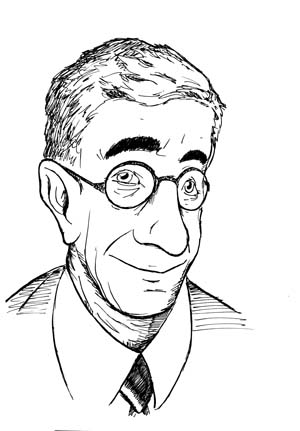
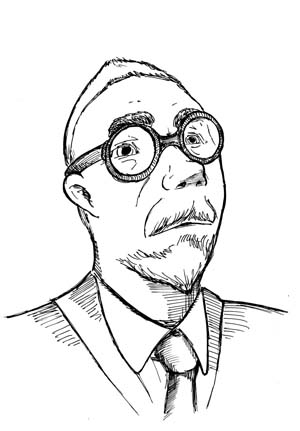
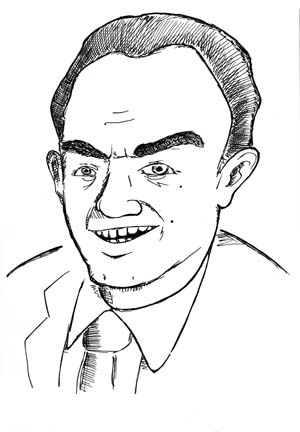
I want to propose to you a powerful way of looking at technology. The plural form of the word, technologies, is becoming meaningless. There is only one globe-spanning beast, comprising vast systems of engineering design, production and operations, held together by a web of standards, and a central nervous system called 'the Internet' (ever wonder why we use the definite article?) This beast is what answers to the singular noun 'technology.' I started exploring this idea in a comic book format recently, in my story Mousetrap 2.0. With Nicholas Carr's Big Switch, the idea seems set for the big time. In this post I want to introduce you to four of my favorite scientist-engineers, who conceived and enabled the creation of this beast in the short span of 50 years between the end of World War II and the turn of the century. Reading from left to right below, these are: Claude Shannon, Vannevar Bush, Norbert Wiener and Herbert Simon.
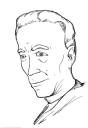
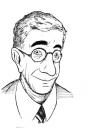
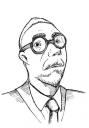
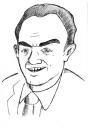
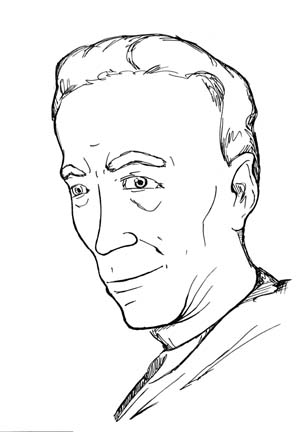
- The Mathematical Theory of Communication by Shannon is surprisingly readable despite the enormity of the idea it introduced. You'll even understand a fair bit without mathematics, thanks to the smart examples. The edition I've linked to has a nice introduction too, by Weaver.
- Science--the endless frontier: A report to the President on a program for postwar scientific research is the most quoted Bush reference, but the Atlantic article linked to earlier is probably a good enough exposure to his ideas.
- From Memex To Hypertext is a relatively recent academic collection that is well worth looking at. It traces the continuing impact of Bush's ideas, and has lately been driving some of my own research.
- Cybernetics, Second Edition: or the Control and Communication in the Animal and the Machine is the book that made Wiener famous. A little turgid and hard to read, but worth the effort. Will give you a serious appreciation for history and what the world was like in the 1940s when these ideas germinated.
- The Sciences of the Artificial - 3rd Edition, again a book that rewards study. Somewhat sloppily written and argued (paradoxically by the guy who taught computers logic), but again, as with all these references, the key is to read it as a history book, not as a technology book.
- Between Human and Machine: Feedback, Control, and Computing before Cybernetics (Johns Hopkins Studies in the History of Technology) the single most impressive piece of technology history I've ever read. Carefully, but humanely deconstructs the origin myths of the fields of control and communication, gently humanizes Wiener without taking him at his own estimation, and paints a brilliant portrait of the forces that came together to create the first signs of a connected world.
- The Big Switch: Rewiring the World, from Edison to Google, which I previously reviewed, should give you a very modern look at technology in the singular.
5 Comments
Most useful, VGR. Thanks for the whistle stop tour. Not knowing too much about any of these worthies, I'll leave it at that. The only other thing is that I'm broadly in agreement with leaving Turing out, leave him to be the god of mathematics and computer science that he is, and out of the technology space.
Venkat, great article as usual. I am almost ashamed to admit that I had heard of none of these people (save for Turing, and even then only in passing) but I think you might have inspired me to learn more.
On a side note, I think that the portraits are wonderful! They are well done and fit nicely into the style of Ribbonfarm.
Take care!
JMK
Justin, you'd be surprised at the number of experienced technologists with long resumes who don't know of these four... a sense of history is not something that everybody develops, since it is possible to survive and be productive in technology without it. I think though that people who do great work, as opposed to people who do merely good work, always have a deep sense of history.
Venkat - based on our back and forth on KM vs. SM, I took some time to read through your content here. Very good stuff. I especially like the tip-of-the-hat to Camus in The Parrot post. It is rare to come across a Renaissance polymath in IT circles - and so prolific too - where do you find all the time? You're going on the RSS feed and I look forward to more food for thought (and argument ;o) in the future!
- Jeff
Thanks, glad you liked the piece. Sisyphus is definitely my role model and I cite Camus too much. One of my readers rightly called me out on this and suggested I use Wile E. Coyote as a role model in the future. I might start doing that.
Venkat